Finance Tracker
See all your money in one place instead of pretending that spreadsheet is up to date
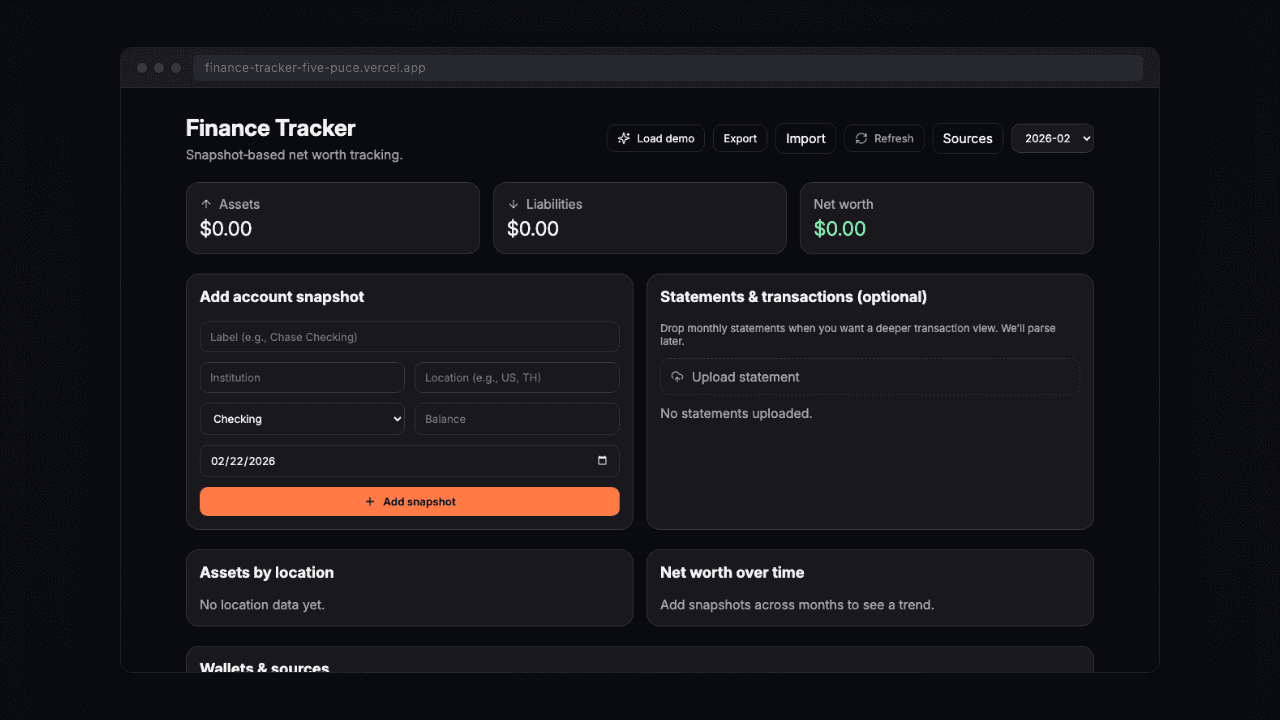
Crypto + bank accounts
Auto-syncs balances
Portfolio over time
The Problem
When you work in crypto, your money ends up spread across 10+ chains and wallets. Ethereum, Arbitrum, Solana, a few exchanges, maybe a hardware wallet. Then there are bank accounts on top of that. No single dashboard shows you the full picture, so you end up with a spreadsheet that's always out of date.
I wanted one place to see everything: crypto balances across all chains, bank accounts, and a history of how my portfolio changes over time.
How It Works
- EVM chain support for Ethereum, Arbitrum, Optimism, Base, Polygon, BSC, and Avalanche. Native balances via public RPCs, token balances via Alchemy when configured
- Solana support with auto-detection. Paste any address and it figures out if it's EVM or Solana
- CSV snapshot import for manual portfolio tracking and wallet matrices
- Plaid bank account sync to pull in balances from traditional bank accounts alongside crypto
- Transaction tracking with monthly summaries so you can see where money is going
The Build
Built with Claude Code over multiple sessions. The first sessions focused on wallet validation and multi-chain support. Getting address auto-detection right was important: EVM addresses start with 0x and are 42 characters, Solana addresses are base58 encoded. The app figures it out so you just paste and go.
Mid-project I migrated from SQLite to Supabase Postgres, which was a bigger deal than expected. The Prisma schema, connection strings, and deployment config all had to change. But it was the right call because serverless functions on Vercel don't play well with SQLite.
The Plaid integration was its own adventure. Sandbox mode, Link tokens, public token exchange. It's a lot of plumbing, but once it's wired up, bank balances just show up alongside your crypto.
What's Next
The core tracker is live and working. Next priorities are token balance tracking (not just native chain tokens) and portfolio performance over time. The real question I want answered: am I actually making money, or just shuffling it between wallets and feeling productive?